
Nº46 Dear John...
Or why I never replied to your letter

A fourth, short essay charting the last days of John Keats...
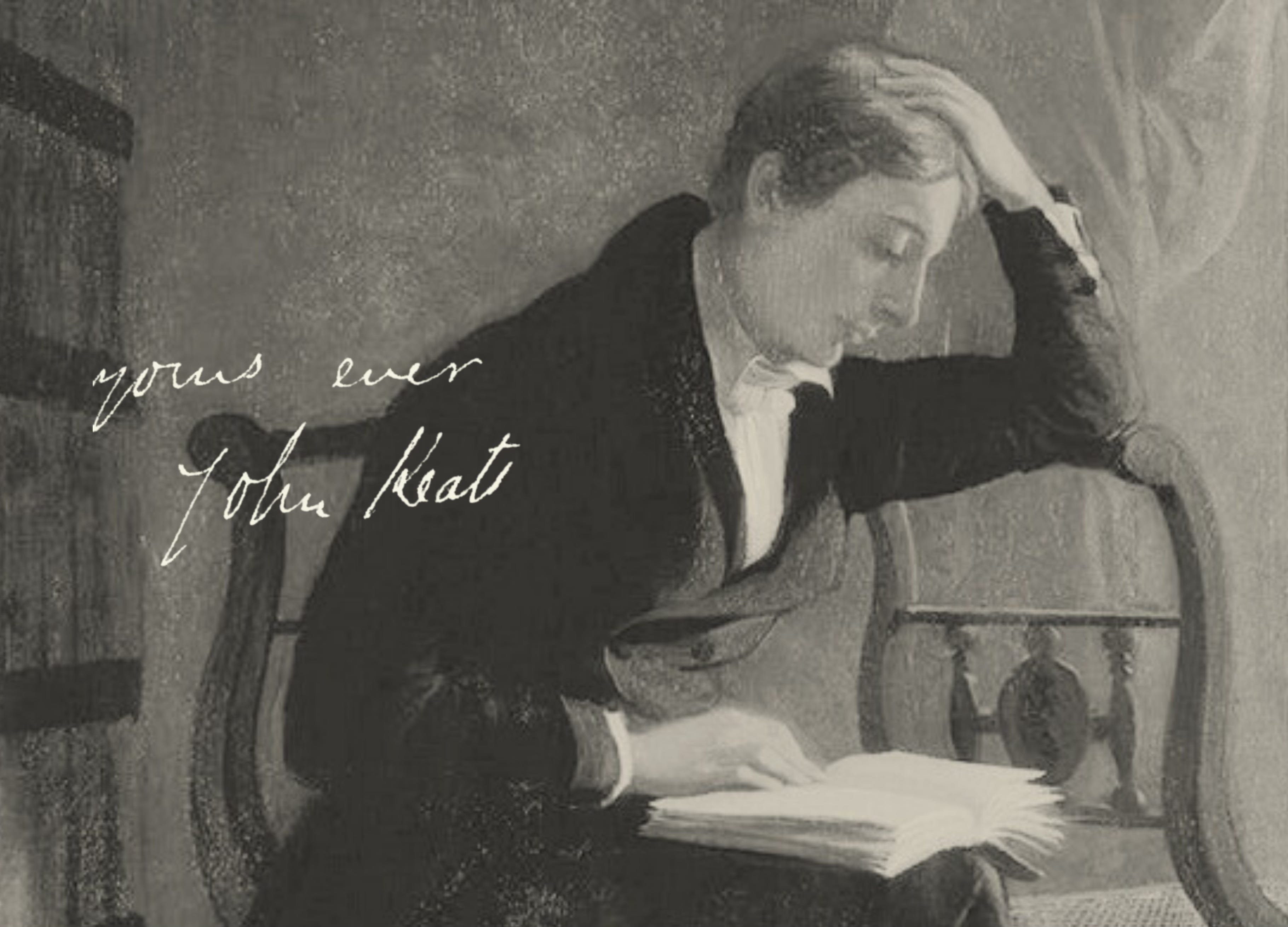
I opened a notebook and out they fell. A flutter of tiny envelopes, the kind that contain cards, memos, love letters. Each bore my name and in that unmistakable handwriting. Your handwriting. A careful calligraphy of round vowel and cautious consonant, a delicate impression left on paper, a trace, a signature of where your fingers moved. But the voices are silent, the juices run dry. This is dead ink.
Yet these marks, these scratches, these stave-less notes vibrate, strike at the strings beneath my tightened breastplate. You know this feeling don’t you John? It was like this for you too, wasn’t it John? When you saw the handwriting, when you saw her handwriting. You couldn’t bear to read the letters either could you? It doesn’t make us the same but perhaps we are similar, tender, thin skinned. It is a deficiency isn’t John? They call it a weakness, a frailty, an infirmity. They don’t know that it may be our superpower too. I fold the letters over, bury them inside the notebook’s cover.
On 11 January 1821 Joseph Severn, the artist charged with John Keats’ care in Rome, writes a letter to Mrs Brawne, the mother of the poet’s fiancée Fanny. Severn is in daily attendance here, frequently at the poet’s bedside, preparing his meals in compliance with the severe starvation diet Keats has been prescribed. He liaises with a local, English doctor, sends begging letters to friends now that their financial situation has become perilous.
John Keats has been told to avoid excitement. It is believed his consumptive condition is caused by an inflation of the passions and these must be tempered. This includes the practice of poetry. While writing might not be manual labour it is emotional work. “The faint conceptions I have of poems to come bring the blood frequently into my forehead,” he had written in the year before his most prolifically industrious period of 1819. Christmas and New Year have passed without celebration but Keats’ health has stabilised after a relapse in December. He had sent his final letter in November and since then Severn has been entrusted with all correspondence. This includes news concerning the health of his friend.
Although Severn is writing to her mother the contents of the letter is intended for her daughter, Fanny Brawne. While Victorian editors later liked to present her as a passive or sentimental figure in this story she is anything but1. She is practical, assured and persistently forthright in her request for information. “If you should hear any thing from Italy, I entreat you will let me know it instantly,” she writes to Charles Brown, Keats’ friend and her Hampstead neighbour. A few weeks later, and just after Keats’ departure for Rome, she presses the point again, “You will oblige me very much by giving me every information you can collect respecting his health.”
That Keats does not or cannot write himself is in part prescribed and in part self-imposed. His silence comes neither from denial nor entirely from despair it is just that composition is beyond him. He knew, most likely, he would die in Rome and never see the woman that he loved again, but to dwell on the tragedy, to finalise it or at least realise it in writing would only serve to further the drama and cause more distress to them both. That he cannot bear to read the correspondence she has sent is something else altogether. It is not a dismissive act, there is plenty of poetry in an unopened letter.
The savage reviews Keats received from the establishment, from the right wing press, were as much attacks on the liberal values the Romantics upheld2 as they were condemnations of his poetry. A harsh critique inflicts a different kind of injury to that felt in a personal letter. I’ve had some unpleasant things said about my work so I know. One write-up savaged a long poem I’d written (one in which Keats gets a mention.) It said the piece was:
“A deeply floral barrage of words that might appeal to those wishing to bask in the glow of literary excess.”
George Rennie, Theatre Weekly 3
While I initially wanted to doorstep the reviewer, give him the Chelsea treatment, go all cockney on him (for anger is only a reflex of oversensitivity) I began to see the pomposity in what he’d written, how close it was to the snobbery Johnny Keats received. I was in good company. It doesn’t make us the same but perhaps we are similar. I’m learning a lot from you John. I’m learning that sometimes it’s better to say nothing at all, to make no response, to just shut the fuck up.
While Keats was shocked by the ferocity of the attack on his epic poem Endymion he was not entirely surprised by it. Byron would later joke that Keats was “killed by an article” but the truth is that he was more robust than the narrative suggests. He was a Londoner, there was a toughness to him. The infamous Blackwood review4 did not cut him too deeply. “I don’t mind the thing much,” he wrote of it to a friend Benjamin Bailey. He knew it could bruise his reputation, affect his sales but he had an inner belief in the worth of his work.
And yet he could not bring himself to read a private letter from his lover. In a little over a month it would be buried with him in Rome, unopened.
On 11 January 1821, when Joseph Severn wrote to Mrs Brawne it was to tell her that he still expected to bring John home later in the spring, such was the hope a new year had brought in. Within a week, however, all optimism would be gone. I’ll be writing more about why in my next instalment in this series on the last days of John Keats.
I’ll also be going live on Substack every Sunday at 5pm to talk about it all. I’ll post the link HERE. Stay tuned.
The concluding essay, at the end of February, will coincide with the poet’s death when I’ll be taking up a short residency at Keats-Shelley Memorial House, Rome, to begin work on a new verse-drama, a contemporary retelling of the Keats story.
I’ll be exploring the Fanny Brawne story more in future editions.
The Romantic period is key to the development of socialism, of feminism and anarchism. The imperialistic resistance to such ideologies very much mirrors our own age and I’ll follow up with an essay on Keats and politics here soon.