

I received an email from the poet. She wrote to tell me that she needed to unsubscribe from my newsletter (my newsletter that I rather grandly call ‘an essay series’.) She explained, and in kind and polite detail, why, precisely why she had to, simply had to, unsubscribe from my newsletter (essay series / manifesto collection.) She told me plainly, honestly, that she was leaving me.
I was sad to see her go. There was so much more I had wanted to say, wanted to share but I’ll remain grateful for the time we spent together, for the words we shared. I am aware she’s not the only one. My numbers are dropping, my engagement is down and with each going there is a grief, a connection lost, a light gone out.
I’m not complaining. It’s not my business. I’m not an entertainer. Although I can see the empty seats and I’m aware when people don’t return after the interval, today I’m not thinking too much about it, because today I’m thinking about you, John. I’m thinking of youthful John Keats and how it must have been for him, with that first vibrant collection, with his first publication, with all the expectation and then little engagement, how his numbers dropped, how his readers left. Some even asked the publisher for their money back. The poet who wrote to me did not ask for her money back. It wasn’t customer dissatisfaction, it wasn’t consumer disapproval. It was something else.
This my 52nd free newsletter / essay / manifesto / article and it marks one year of writing weekly dispatches on this platform. It is also the tenth and final chapter in a series I’ve been writing about the poet John Keats and his last days in Rome.
February is an important month in the Keats calendar. It was in February of 1820 that the poet suffered his first lung haemorrhage, coughing blood and understanding the seriousness of his condition. He would die the following February in Rome, cared for by his friend, the artist Joseph Severn.
Over these last weeks I’ve described events leading up to his death and it doesn’t make for easy reading. We know how this story plays out and who really would want to follow it toward its inevitable, uncomfortable, painful end? This wasn’t exactly the reason the poet who wrote to me gave when she left but I think it had something to do with it. She’d spent long periods of last year in hospital, in pain and witness to the pain of others. Weekly instalments describing another poet’s demise isn’t exactly the most comforting material to receive. I myself find a fatigue has set in as the story of Keats approaches its sad conclusion. I mean, what do you say? I mean, what can you say?
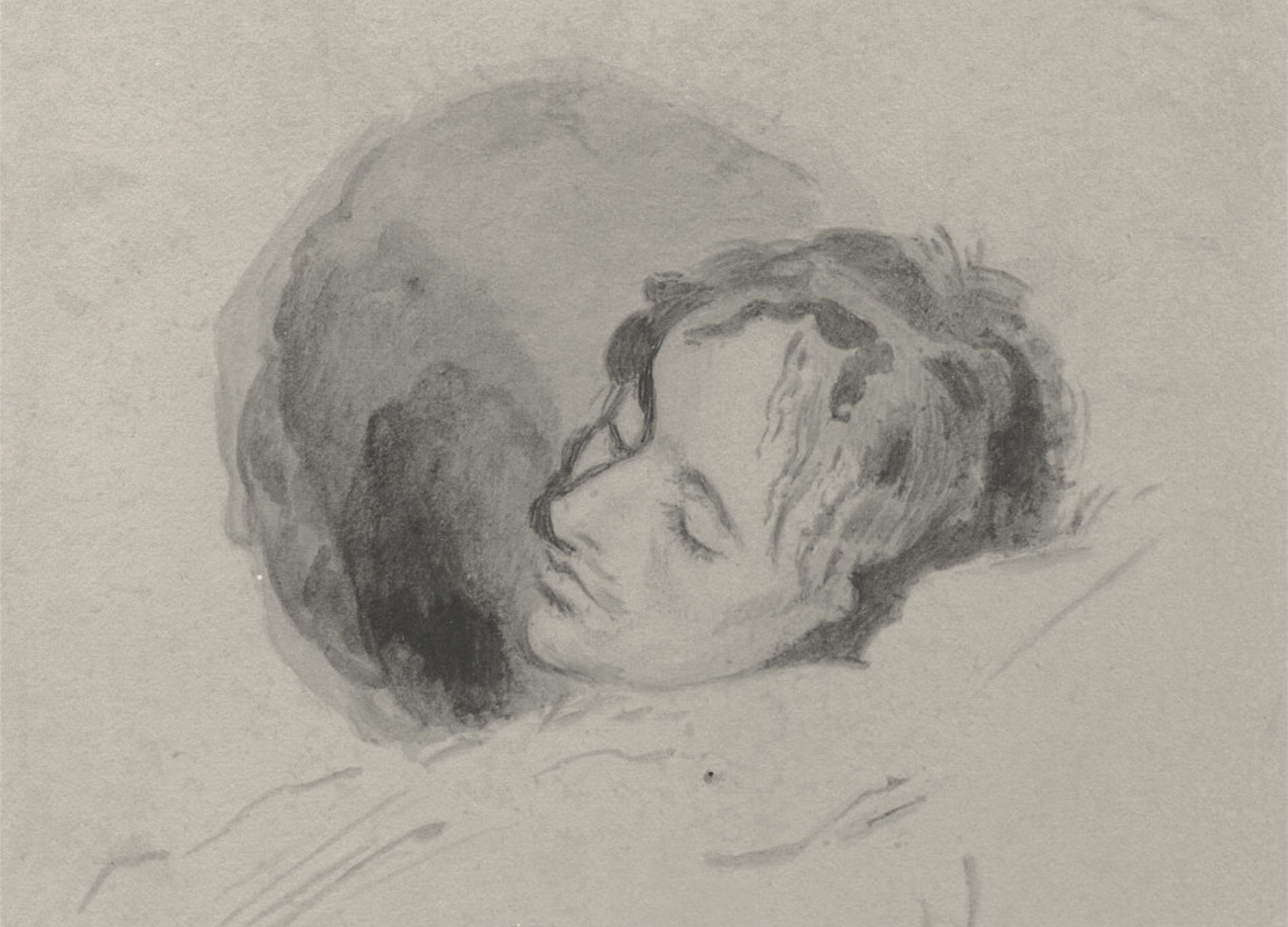
I am reminded of an animator who worked on the film production of Raymond Briggs’ When The Wind Blows about a couple who survive an atomic bomb blast only to slowly succumb to the fall out and radiation. The animator described how they had lovingly drawn the couple, frame by frame, over months, years, had come to know them intimately, had even come to love them. As the story progressed, as the characters grew sicker, the animator grew sadder, began to feel as if they couldn’t finish their work. They didn’t want the characters they had drawn to die. They didn’t want to participate in their deaths. And I’m feeling the same way. I’ve gotten to know John over these last weeks and I don’t want him to go. I mean, what am I going to do without him? I mean, what am I going to do?
Instead I thought I’d shift focus, not in order to avoid describing how a light went out, not to ignore the Bright Star of this story but to consider its supporting actor, Joseph Severn.
Severn had been with Keats on his journey from London in September of 1820 when the Maria Crowther set sail on an arduous voyage to Naples. He was there for the poet’s 25th birthday in October spent in quarantine on their ship in the Italian port. There are stories that he threw Keats’ opium overboard into the Bay of Naples believing, with their arrival, the promise of fairer weather would restore the poet’s health.
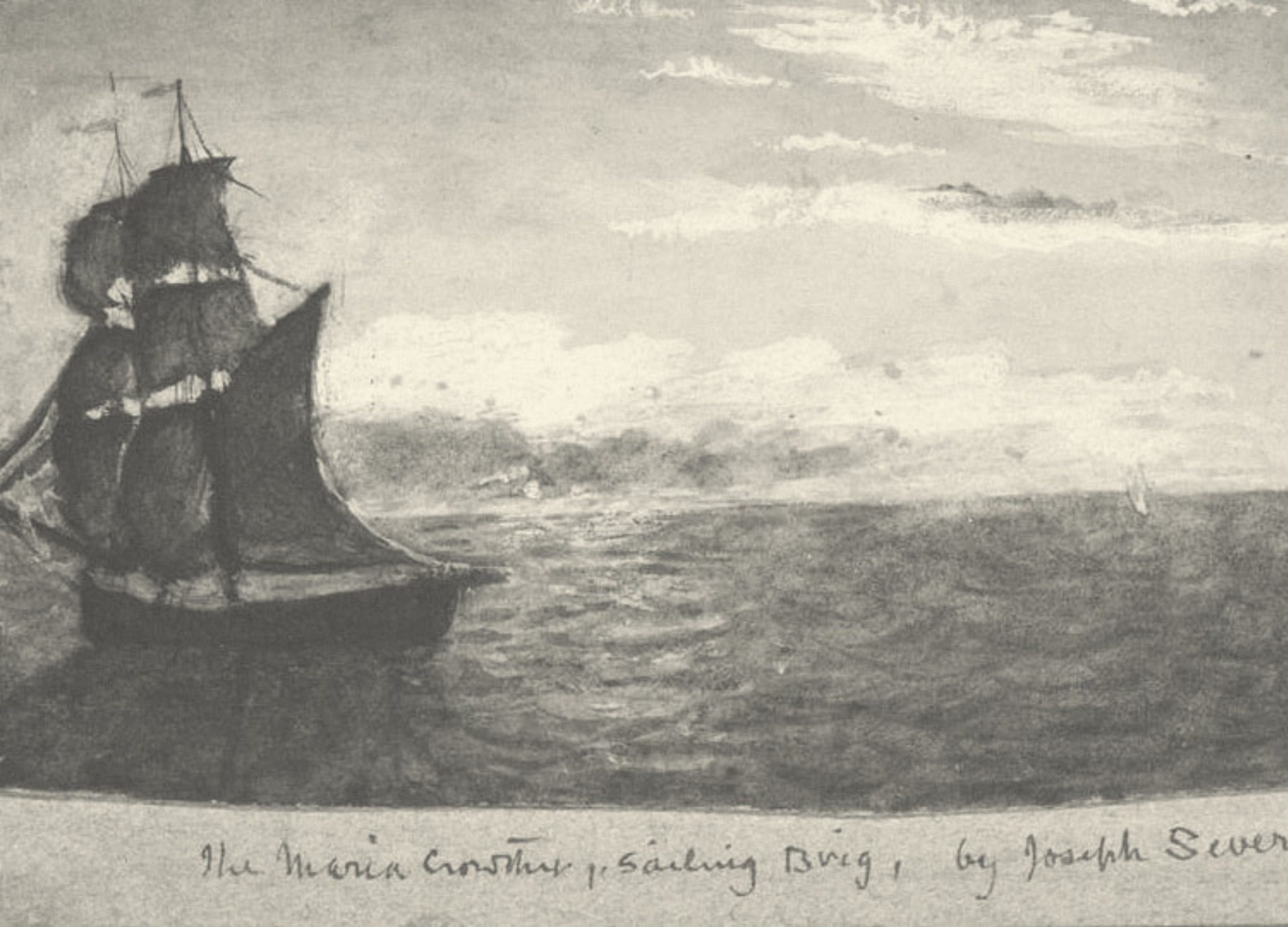
Severn felt Keats no longer required the drug he’d used to treat the pain of his condition and the sore throats he suffered brought on by coughing fits. Severn later removed (another) bottle of laudanum from Keats’ possession in Rome when he feared the poet may try to take his own life. Severn was a man of faith. A believer in God. Keats was not. While Keats didn’t possess the same fierce atheism that earned Shelley the epitaph of ‘the infidel poet’ he was a free thinker, his devotion was to poetry. That he may have been tempted in his last days by the ‘ungodly’ act of suicide was something abhorrent to Severn. Although it goes too far to say he’d rather see his friend suffer in acute pain than provide him with opportunity to end it forever we do know how tormented Severn was in his duty of care, how he wrestled with decisions such as this.
Nicholas Roe, chair of the Keats Foundation and fellow of the Royal Society of Edinburgh, states in his 2012 biography that he believed that Keats was in fact an opium addict and Severn, among several of his friends, was aware of this. It is a claim, of course, and there’s no real evidence beyond the jealous mood swings Keats displays in letters to his fiancee Fanny Brawne and veiled references to the use of opiates (in Ode to a Nightingale for example) to support it. He certainly didn’t have the same appetites as Samuel Taylor Coleridge who was a bonafide junkie and the first poet to enter rehab. But that’s another story.
Keats used drugs and there should be no shame in that. Neither should there be shock or outrage at suggestion he may even have become addicted, whether from medical application or in experimentation. Addiction is as nuanced and complex as poetry and it requires as much study and contemplation. While the Keats story needs a little loosening up after its sanitisation by Victorian purists it doesn’t require Daily Mail sensationalism: ‘Georgian Poet in Roman Drug Orgy: Horror as heroin addicted London poet threatens suicide on the Spanish Steps’
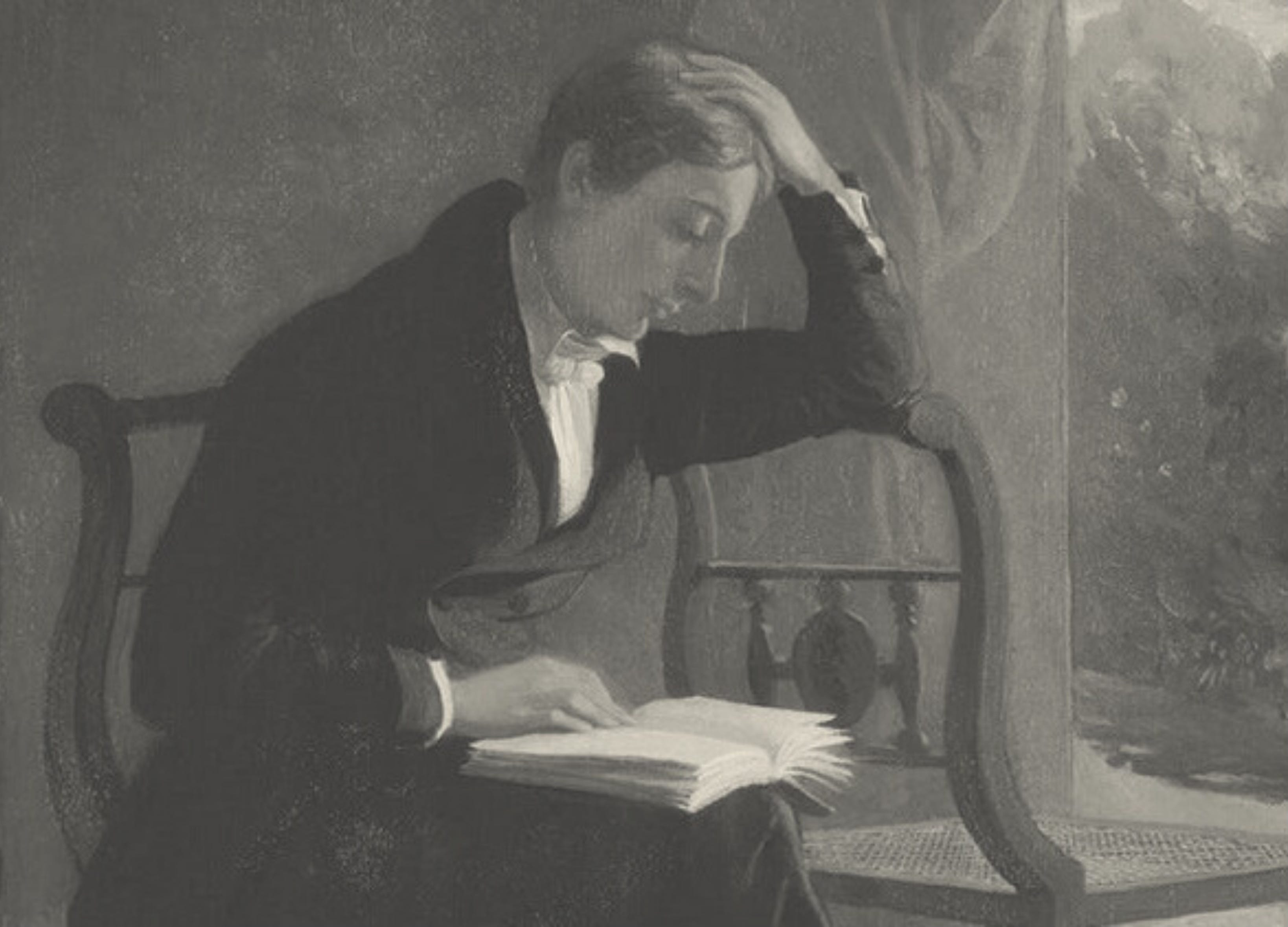
I have seen my mother wracked with pain in a hospital bed (the ward immediately below hers is named Keats Ward) and I have called for the doctors to increase her morphine, have counted down the hours until her next dose and I don’t think I’ve been enabling an addict. Neither do I believe that Severn was unduly puritanical in his attitude to pain relief. He never explicitly tried to convert Keats to religion or preach to him (although he did read to him from Christian texts.) Severn was a man of measure, perhaps not of passion. Like the When The Wind Blows animator, he was an artist, had the sensitivities of an artist, the doubts and troubles and agonies of one and he loved as an artist loves: in detail and in depth. Above all he recognised the artist in Keats, forgave him his complaints, accepted his rages. He didn’t care that Keats wasn’t famous, wasn’t a person of influence, didn’t have the numbers. He just wanted his pain to go away and prayed that his friend may be saved.
I’m a little sad that my poet subscriber, who had been with me since the beginning of this year long endeavour, didn’t stay on, but I’m very glad, so very glad that Joseph Severn stayed with Keats until the very end. It was not in the images that he made, how he documented, even romanticised the Keats story, more that he was simply there, present, holding his friend’s hand, gathering him in his arms when his breath finally left him. There is an art to that, an art to caring, an art to loving. That, that is true engagement. And it has nothing to do with numbers.
Launching ‘A Masque for Keats’ at Keats-Shelley house in Rome on 28th February, a new verse-drama at the intersection of theatre and poetry…
REMEMBER I go live on Substack every Sunday at 5pm to talk all things John Keats…
I lost an uncle to cancer on Monday. By Thursday he was buried. That’s the Irish way. It has sparked beautiful conversations about the art of dying. We are designed to die, the body knows how to do, and when you’ve been lucky enough to be present at someone’s death, you know how beautiful that can be. I loved my Dad to death, just as he’d loved me to life. He was in the room when I was born and I was in the room when he died. I cannot think of a more intimate and beautiful thing than that. It was painful and scary and all the things but in those final moments it was utterly beautiful. I have loved this series. I still have episodes in it to catch up to, I cannot meet a weekly schedule of anything in life, even when I really want to. But I read four in one sitting the other week ❤️
What a beautiful ode to mark a year of glorious wordery : ))